- Home
-
Shop By Brand
Shop By Top Brands
View All Brands -
Interior
Interior
Browse All Interior Featured Category
Interior
-
Exterior
Exterior
Browse All Exterior Featured Category
Exterior
-
Paint Care
 Featured Category
Paint Care
- Detailing & Accessorie
- Pages




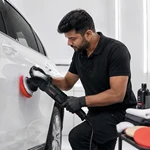
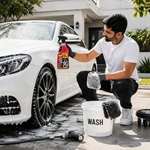

How to Remove Water Spots From Car Paint and Glass Safely
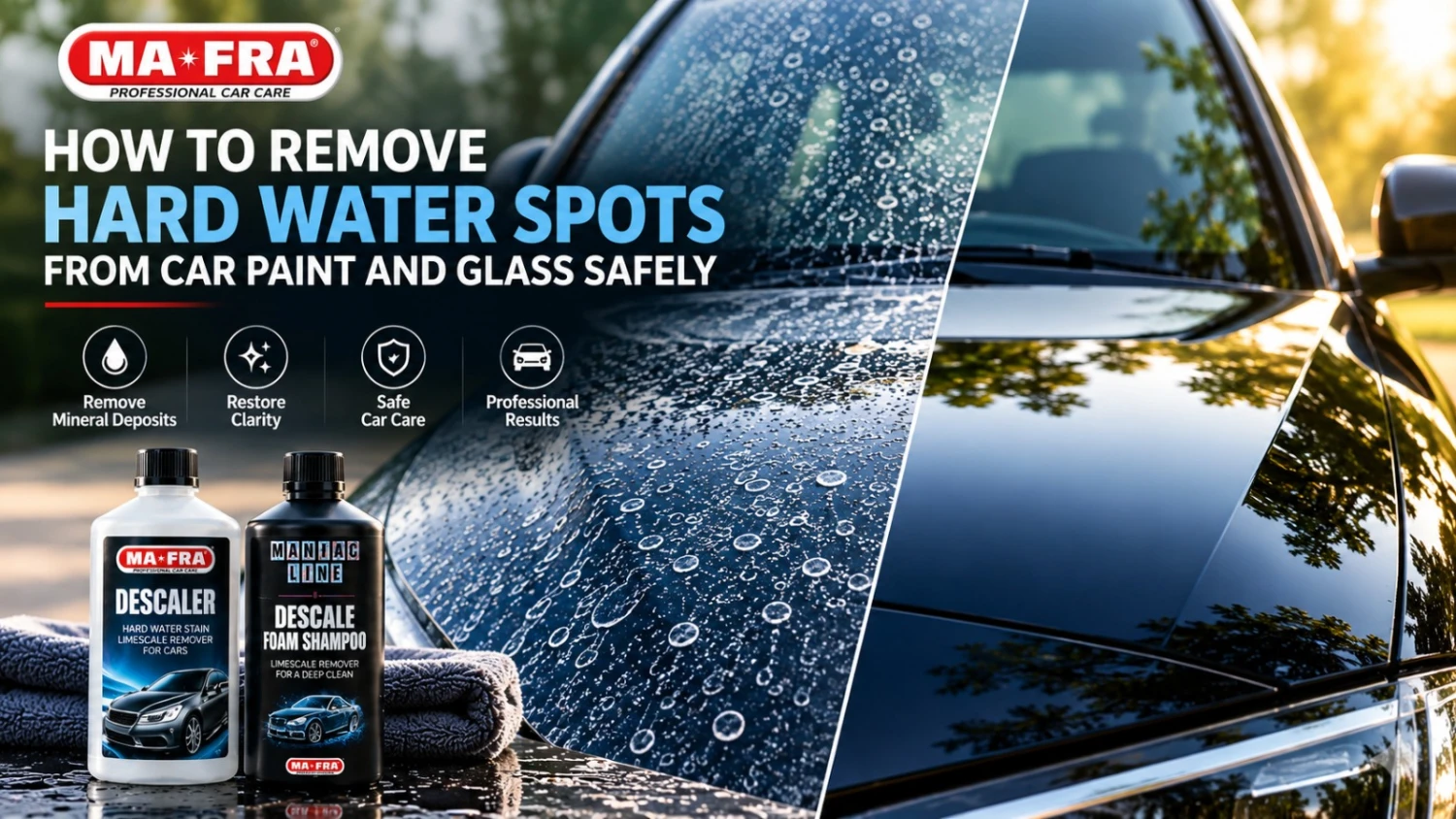
You wash your car properly, rinse it and
leave it looking clean. A few minutes later, white circles or cloudy marks
appear on the paint or glass.
These marks are often water spots.
They are especially common when a car is
washed with hard water or when water is allowed to dry naturally on the
surface.
Some water spots are easy to remove. Others
remain even after a normal car wash because minerals have bonded with the
surface.
The important part is identifying what you
are dealing with before trying stronger cleaning methods.
Using the wrong product or rubbing the
surface aggressively can create more work instead of solving the problem.
This guide explains how water spots form,
how to identify them and how to remove them from car paint and glass safely.
What Are Water Spots on a Car?
Water spots are marks left behind after
water droplets dry on a vehicle.
Water is rarely completely pure. It may
contain dissolved minerals such as calcium and magnesium.
When a water droplet evaporates, the water
disappears but some of these minerals can remain on the surface.
·
White circular marks
·
Cloudy patches
·
Chalky deposits
·
Rings around dried droplets
·
Rough mineral buildup
·
Marks that remain after washing
The condition of the water spot depends on
how long it has remained on the vehicle and how strongly the deposit has bonded
with the surface.
Why Do Cars Get Hard Water Spots?
Hard water is one of the most common
reasons.
·
Washing the car with
mineral-rich water
·
Allowing rinse water to dry
naturally
·
Parking near lawn sprinklers
·
Rainwater drying with surface
contamination
·
Repeated washing without proper
drying
·
Water collecting around
mirrors, handles and panel gaps
·
Mineral deposits building up
over time
Heat can make the problem more noticeable
because water dries faster on a warm panel. This is why washing a car under
strong direct sunlight can sometimes leave visible spotting.
Are All Water Spots the Same?
No. Understanding the type of mark helps
you choose the right method.
Fresh Water Marks
These are usually recent marks left when
water dries on the surface. A proper wash followed by careful drying may be
enough to remove them.
Mineral Deposits
These are more stubborn. Minerals remain
attached to the surface even after normal dirt has been removed.
A regular shampoo may clean dust, road dirt
and loose contamination but may not fully remove bonded mineral deposits. This
is where a dedicated mineral-removal or descaling product can become useful.
Etched Water Spots
Some marks are no longer just deposits
sitting on top of the surface. If contamination remains for a long period, a
visible defect may remain after the mineral residue has been removed.
At this stage, cleaning alone may not
completely restore the finish. Professional inspection or paint correction may
be required depending on the condition.
How to Check Whether a Water Spot Is a Surface Deposit
Start with the least aggressive method.
Wash the affected area properly and dry it
with a clean microfiber towel.
Look at the surface again.
If the mark disappears, it was probably a
light surface residue.
If the circular or cloudy mark remains,
mineral contamination may still be present.
If the surface feels clean but the mark
still appears to be inside the finish, the problem may be deeper than normal
surface contamination.
Avoid immediately reaching for a polishing
compound. Cleaning and paint correction solve different problems.
How to Remove Water Spots From Car Paint
Start With a Proper Car Wash
Remove loose dirt before treating the water
spots. Working directly on a dirty panel can drag contamination across the
paint.
Use a suitable automotive shampoo and wash
the vehicle carefully. Rinse the vehicle thoroughly.
Dry the Surface
Use a clean drying towel instead of
allowing the car to air dry. This gives you a clear view of which marks remain
after washing.
Inspect the Remaining Marks
Check whether you are seeing loose residue,
mineral rings, heavy mineral buildup or a paint defect. This inspection
prevents unnecessary use of stronger products.
Use a Product Designed for Mineral Contamination When
Needed
If mineral spots remain after normal
washing, a product specifically designed for mineral or limescale contamination
is more appropriate than simply using more shampoo.
For hard-water stains and mineral buildup, MAFRA Descaler
is available through Detailing Essentials. Choose it only when the problem
matches its intended use and follow the product instructions.
Do not assume that every mineral-removal
chemical uses the same dilution, working time or application method.
Inspect the Surface Again
After the mineral residue has been removed,
check whether the visible spot has also disappeared. If the deposit is gone but
a mark remains in the paint, the remaining problem may require paint correction
rather than further chemical cleaning.
How to Remove Hard Water Spots From Car Glass
Glass can also collect heavy mineral
deposits. They often appear around windscreen edges, side windows, wing
mirrors, sunroofs and areas exposed to sprinklers.
Clean the glass first, dry it, then inspect
what remains. If ordinary glass cleaning removes the mark, stronger treatment
is unnecessary.
If mineral buildup remains, choose a
product that is approved for the surface you are treating. Always check the
product instructions first.
Why Normal Car Shampoo May Not Remove Old Water Spots
Car shampoo is mainly used to remove normal
wash contamination such as loose dirt, dust and road grime.
Once water evaporates, mineral deposits may
remain bonded to the surface. Repeated washing with normal shampoo may
therefore clean the panel without fully removing the mineral deposit.
More shampoo is not always the solution.
Sometimes you need a different type of product.
Water Spot Remover vs Iron Remover
These products solve different problems.
A water spot or mineral remover is intended
for mineral contamination associated with dried water, calcium or limescale.
An iron remover is designed for ferrous
contamination such as brake dust and industrial fallout.
If your car has orange or rust-coloured
dots rather than white mineral rings, you may be dealing with a different type
of contamination. Correct diagnosis should come before product selection.
Can Descaling Shampoo Help With Mineral Buildup?
For certain maintenance situations, a
specialised descaling shampoo can be useful.
Maniac Line
Descale 2-in-1 Foam Shampoo is available through Detailing
Essentials for mineral and limescale-focused wash work. It should be used
according to the product directions rather than treated as the default shampoo
for every wash.
A regular maintenance shampoo is for
routine dirt. A descaling wash is for a more specific contamination problem.
What Should You Avoid When Removing Water Spots?
·
Do not solve every spot by
rubbing harder.
·
Do not use random household
chemicals without checking automotive surface suitability.
·
Do not jump directly to
polishing when the problem may only be mineral contamination.
·
Do not let strong products dry
on the surface.
A better approach is to identify the
contamination, start with a normal wash, choose the least aggressive suitable
process and inspect the finish before moving to polishing.
How to Prevent Water Spots After Washing
Wash in a Cool Area
A cool panel gives you more time to rinse
and dry the car properly.
Do Not Let Water Dry Naturally
Dry the vehicle after rinsing. Pay
attention to mirrors, badges, handles and panel gaps.
Use a Clean Drying Towel
A suitable microfiber drying towel helps
remove remaining water before it evaporates.
Work Panel by Panel When Necessary
If the weather is hot, do not leave large
areas covered in water for too long.
Watch the Water Source
If your area has hard water, spotting may occur
more quickly. Careful rinsing and drying become more important.
Choosing the Right Mafra Product for the Problem
Product selection should depend on the
contamination.
For everyday dirt and maintenance washing,
use an appropriate automotive shampoo. For visible mineral deposits or
hard-water marks, use a mineral-removal or descaling product only when the
surface and problem match the product instructions.
You can also explore the wider Mafra car care
range on Detailing Essentials when you need to compare products
for different exterior cleaning and detailing requirements.
When Should You Visit a Professional Detailer?
·
Water spots remain after
mineral removal
·
The marks appear etched into
the paint
·
A large part of the vehicle is
affected
·
The car has a coating and you
are unsure about chemical compatibility
·
Polishing may be required
·
The condition of the clear coat
is uncertain
A detailer can inspect the surface and
decide whether cleaning, decontamination or paint correction is appropriate.
Frequently Asked Questions
Can normal car shampoo remove water spots?
It can remove fresh surface dirt and some
light residue. Bonded mineral deposits may require a product specifically designed
for mineral contamination.
Why do water spots come back after washing?
The visible minerals may not have been
completely removed, or new water may have dried on the surface after washing.
Can hard water damage car paint?
Hard-water deposits should not be ignored.
The longer contamination remains on the surface, the more difficult it may
become to remove safely.
Can I use water spot remover on car glass?
Only use a product on glass when its
instructions confirm that it is suitable for that surface.
Is water spot remover the same as car polish?
No. A mineral remover deals with
contamination. Polish is used for paint correction or finish improvement.
Are white spots and orange spots the same problem?
Usually not. White or chalky deposits can
indicate mineral contamination. Orange or rust-coloured contamination may be
associated with ferrous particles.
Should I polish the car after removing water spots?
Not automatically. If removing the mineral
deposit restores the finish, polishing may not be necessary.
Final Thoughts
Water spots may look like a simple cleaning
problem, but not every mark should be treated in the same way.
Start by washing and drying the car
properly. If the marks disappear, no further treatment is required. If mineral
deposits remain, move to a product designed for mineral contamination.
The most effective approach is simple:
identify the problem first, choose the correct method and use the right product
only when it is needed.
Recent Posts


DIY Car Detailing Guide Using Mafra Products


Professional Car Care Products and Detailing Solutions