- Home
-
Shop By Brand
Shop By Top Brands
View All Brands -
Interior
Interior
Browse All Interior Featured Category
Interior
-
Exterior
Exterior
Browse All Exterior Featured Category
Exterior
-
Paint Care
 Featured Category
Paint Care
- Detailing & Accessorie
- Pages






Why Does Car Windshield Glass Look Hazy? Causes and Cleaning Solutions
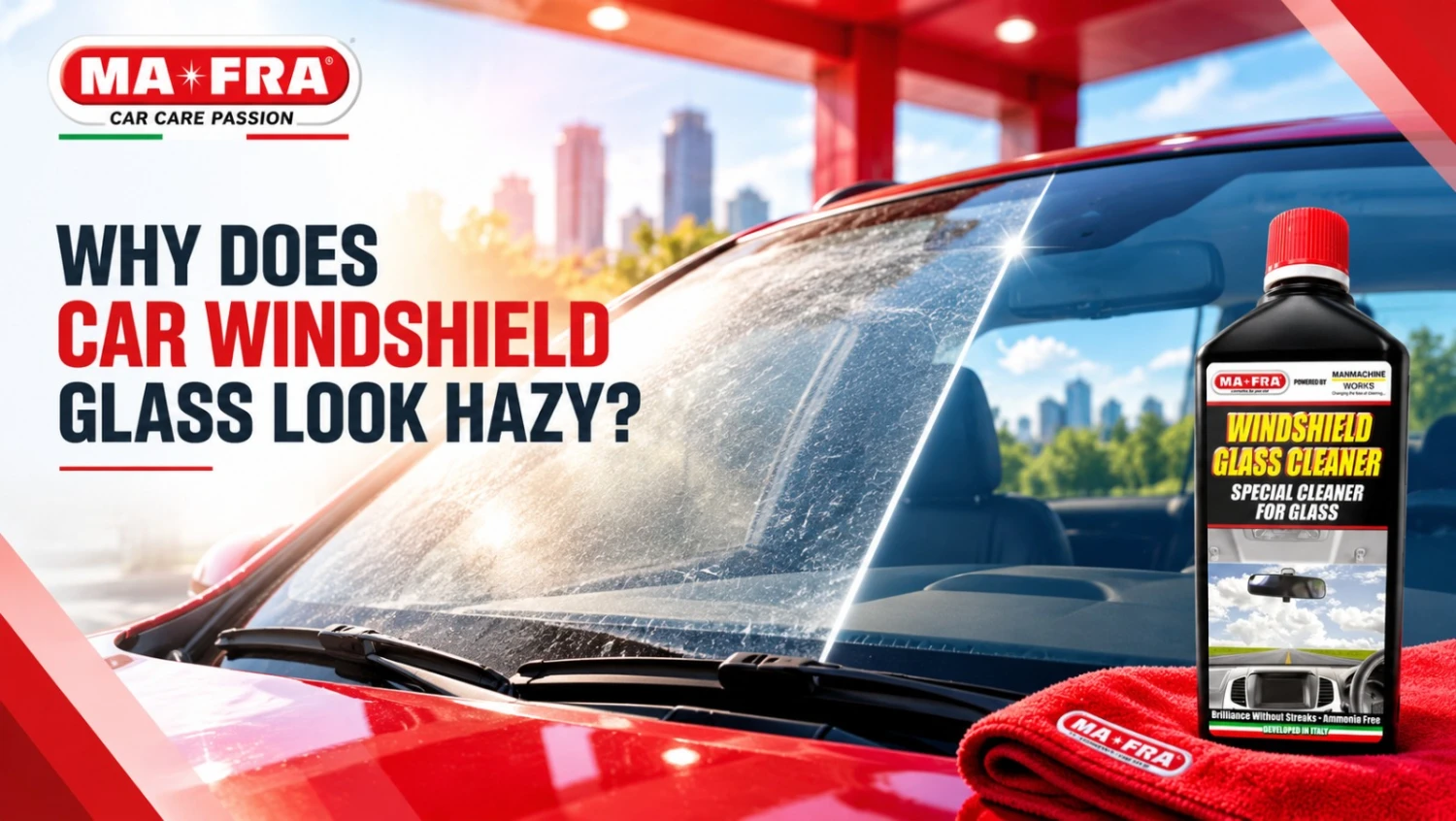
Why Does Car Windshield Glass Look Hazy? Causes and Cleaning Solutions
You wash your car, wipe the windshield and think the glass is clean. But when sunlight hits it, a cloudy layer becomes visible.
Sometimes it looks greasy. Sometimes you notice white spots. At night, headlights from other vehicles can make the problem even more noticeable.
A hazy windshield is not always caused by ordinary dust. The glass may have an oily film, mineral deposits, cleaning residue or permanent surface damage.
The good news is that many common types of haze can be removed with proper cleaning.
The important thing is to identify the cause before choosing a product.
Why Does Car Windshield Glass Look Hazy?
Quick Answer: A car windshield can look hazy because of oily residue on the inside, dust and road film on the outside, hard-water deposits, dirty wiper blades or leftover cleaning products. Sometimes the cloudiness is temporary condensation. Scratches and pitting can also scatter light, but cleaning cannot remove this type of damage.
The correct solution depends on what is causing the haze.
For everyday dirt and oily residue, a suitable Mafra Windshield Glass Cleaner and clean microfiber cloth can help restore clarity.
For mineral deposits or damaged glass, a different approach may be needed.
How to Identify the Type of Windshield Haze
Before cleaning, check what the glass looks like.
This quick check can save time and prevent unnecessary scrubbing.
7 Common Causes of Hazy Car Windshield Glass
1. Oily Film on the Inside of the Windshield
The inside of a windshield can collect a thin layer of oily residue.
Interior plastics, vinyl surfaces, smoke, air fresheners and dashboard dressings may contribute to this buildup.
When the car is parked in strong sunlight, heat can make the film more noticeable.
You may see it when driving towards the sun or when headlights shine through the glass at night.
What to do: Use an automotive glass cleaner with a clean microfiber cloth. Pay attention to the lower windshield area near the dashboard.
2. Road Dust and Traffic Pollution
Indian roads expose vehicles to dust, exhaust residue and other airborne contamination.
Cars used regularly in busy traffic may collect a film on the outside of the windshield.
This is especially noticeable after driving through dusty roads or areas with construction work.
A quick dry wipe may spread the contamination rather than remove it.
What to do: Rinse away loose dirt first. Then clean the glass using a suitable product.
3. Hard-Water Spots
Hard water contains dissolved minerals.
When water dries on the windshield, some minerals can remain as white spots or circular marks.
This can happen after washing a car with mineral-rich water or leaving rinse water to dry in direct sunlight.
A normal glass cleaner may not remove heavily bonded deposits.
What to do: Start with normal washing and drying. If the spots remain, read Mafra India's guide on how to remove water spots from car paint and glass.
Only use a mineral-removal product if its instructions confirm suitability for automotive glass.
4. Dirty or Worn Wiper Blades
Windshield wipers collect dirt and road residue.
When the blades move across the glass, they may leave streaks.
Old or damaged rubber can also create uneven wiping patterns.
You may notice curved marks across the windshield after using the wipers.
What to do: Inspect the rubber blades and clean them according to the vehicle manufacturer's guidance. Replace blades that are damaged or no longer wipe properly.
5. Wax, Polish and Cleaning Product Residue
During car washing and detailing, products can accidentally reach the windshield.
Wax, polish and certain dressings may leave a film if they are not removed properly.
Using a dirty microfiber cloth can also transfer product residue onto the glass.
What to do: Use a separate microfiber cloth for glass cleaning. Avoid using towels previously used for wax, tyre dressing or polishing compounds.
6. Tree Sap and Insect Residue
Cars parked outdoors may collect tree sap, insect residue and other bonded contamination.
These deposits can leave visible patches on the glass.
Trying to remove them by rubbing aggressively can create scratches if grit is present.
What to do: Wash the glass first and use a product suitable for the specific contamination. Avoid scraping with unsuitable tools.
7. Scratches and Glass Pitting
Not every cloudy mark is a cleaning problem.
Over time, road grit and small stones can leave scratches or pits in the windshield.
These defects may scatter light, especially at night.
A normal glass cleaner cannot repair them.
What to do: If the glass remains hazy after careful cleaning, have it inspected by a qualified automotive glass professional.
How to Clean Car Windshield Glass Without Leaving Streaks
Cleaning the windshield properly does not require a complicated process.
You mainly need the right product, clean cloths and a cool glass surface.
What You Need
Automotive windshield glass cleaner
Two clean microfiber cloths
Clean water
Suitable car shampoo for exterior washing
A separate cloth for the wiper blades
Step 1: Park in the Shade
Avoid cleaning glass that is hot from direct sunlight.
On hot glass, cleaning liquid may dry before you can wipe it properly.
This can leave visible streaks.
Let the glass cool before starting.
Step 2: Remove Loose Dirt
If you are cleaning the outside windshield, rinse away dust and loose dirt first.
Use a suitable car shampoo when necessary.
Do not rub heavily contaminated glass with a dry cloth.
Step 3: Clean the Wiper Blades
Inspect the wiper rubber for dirt or damage.
Follow the vehicle manufacturer's guidance when lifting or servicing the wipers.
Use a damp cloth to remove loose residue from the rubber.
If the blades are cracked or damaged, cleaning alone may not solve the problem.
Step 4: Apply Glass Cleaner
Use a product intended for automotive glass.
For interior cleaning, apply the cleaner to the microfiber cloth to reduce overspray onto the dashboard and nearby surfaces.
Mafra India offers a Windshield Glass Cleaner intended for removing road film, smudges and everyday glass contamination.
Follow the product instructions and check compatibility with any aftermarket window film or glass treatment.
Step 5: Wipe in Straight Lines
Clean one manageable section at a time.
Use straight, overlapping strokes.
You can wipe the outside glass horizontally and the inside vertically.
This makes it easier to identify which side has remaining streaks.
Step 6: Buff With a Dry Microfiber Cloth
Use a second clean, dry microfiber cloth to remove remaining moisture and residue.
Do not use the same towel for the dashboard, tyres and glass.
Step 7: Clean the Edges
Pay attention to the lower windshield edge and the corners.
These areas are easy to miss.
Use a folded microfiber cloth to reach them.
Step 8: Check the Glass
Inspect the windshield from different angles in safe lighting.
If the haze remains, identify whether it is grease, mineral contamination, condensation or glass damage before repeating the process.
How to Remove Haze From the Inside of a Car Windshield
Interior windshield haze often looks greasy rather than dusty.
You may notice that wiping the glass with a dry cloth only spreads the marks.
Try this method:
Park the car in a shaded area.
Use a clean microfiber cloth to remove loose dust.
Apply a suitable glass cleaner to another cloth.
Wipe the windshield in manageable sections.
Buff the glass with a dry microfiber cloth.
Inspect the glass for remaining streaks.
If the oily film returns frequently, check whether interior dressings or other products are leaving residue near the glass.
You can also explore Mafra India's interior cleaning products for maintaining surrounding cabin surfaces.
Keep dashboard cleaning cloths separate from windshield towels.
How to Remove Haze From the Outside of a Windshield
Exterior glass collects different contaminants from interior glass.
Common examples include:
Road dust
Traffic pollution
Mud splashes
Insect residue
Water spots
Wiper residue
Start by washing the glass.
After removing loose dirt, use an automotive glass cleaner to remove remaining surface film.
For everyday cleaning, browse Mafra India's car glass cleaning products.
If white mineral marks remain after cleaning, do not assume that applying more glass cleaner will solve the problem.
The deposits may require a different, glass-compatible treatment.
Windshield Haze vs Condensation: What Is the Difference?
These problems can look similar, but they need different solutions.
Windshield haze is usually a film, residue, deposit or surface defect.
Condensation is moisture collecting on the glass when temperature and humidity conditions cause water vapour to condense.
For example, during India's monsoon season, humid air and temperature differences may cause the windshield to mist.
If the cloudiness clears when the ventilation or defogging system is used, condensation is a likely cause.
If the film remains after the moisture disappears, the glass may also need cleaning.
Do not try to solve condensation only by applying more cleaning product.
Can Hard-Water Spots Make Windshield Glass Look Cloudy?
Yes.
Mineral deposits can create white marks and cloudy patches.
These marks are common where water repeatedly dries on the glass.
Examples include:
Washing with hard water
Parking near sprinklers
Leaving rinse water to dry
Water collecting around windshield edges
Light residue may disappear during normal washing.
Bonded mineral deposits may require a suitable specialist product.
For a detailed explanation, see How to Remove Water Spots From Car Paint and Glass Safely.
Do not use an acidic cleaner, abrasive compound or mineral remover on automotive glass unless the product instructions specifically approve that application.
Choosing the Right Car Windshield Glass Cleaner
A good windshield cleaner should match the type of contamination and the surface being cleaned.
Check Automotive Glass Compatibility
Choose a cleaner intended for vehicle glass.
If your car has aftermarket tint, protective film or a specialist glass coating, check compatibility first.
Look for Easy Residue Removal
A cleaner should help remove fingerprints, road film and ordinary grime without leaving unnecessary residue when used correctly.
Use the Right Microfiber Cloth
The cloth matters as much as the cleaner.
A dirty or product-contaminated towel can leave streaks even when the cleaning solution is suitable.
Follow the Product Instructions
Do not assume every glass cleaner has the same application method.
Check the label for dilution, use instructions and surface restrictions.
Mafra India's Windshield Glass Cleaner is listed for interior and exterior automotive glass cleaning. <Cite refs={["turn931487search0"]}/>
How to Prevent Windshield Haze in Indian Conditions
A few simple habits can help keep the windshield cleaner.
During Summer
Clean the inside glass regularly, particularly if the vehicle spends long periods parked in the sun.
Avoid applying excess dashboard dressing near the windshield.
During Monsoon
Check the wiper blades and keep the windshield clean.
Use the vehicle's defogging system when condensation affects visibility.
In Dusty Areas
Remove loose dust before wiping the glass.
Avoid using a dry cloth on heavily contaminated exterior glass.
After Washing
Dry the windshield with a clean towel.
Do not leave mineral-rich water to evaporate on the surface.
During Regular Car Detailing
Use separate towels for glass, paint, wheels and interior cleaning.
This reduces the chance of transferring wax, grease or dirt between surfaces.
Common Windshield Cleaning Mistakes
Avoid these habits:
Cleaning hot glass in direct sunlight
Wiping heavy dust without rinsing
Using a towel contaminated with wax or dressing
Applying unsuitable household chemicals
Scrubbing with rough pads
Ignoring worn wiper blades
Repeatedly using stronger products without identifying the cause
Trying to polish damaged glass without professional assessment
If you are building a home car-care routine, Mafra India's DIY car detailing guide provides related cleaning guidance.
When Should You Visit a Professional?
Some windshield problems need more than routine cleaning.
Arrange an inspection if:
The haze remains after careful cleaning.
Scratches or pits affect your view.
The glass has visible cracks.
Heavy glare continues after the surface is clean.
You are unsure whether the windshield has a coating or film that could be damaged.
Do not continue driving when windshield visibility is seriously reduced.
Final Thoughts
A hazy car windshield can have several causes.
Interior oily film, road grime, dirty wipers and light surface residue can often be addressed with proper cleaning.
Hard-water deposits may need a different treatment, while scratches and pitting require professional assessment.
The best approach is to identify the problem first, clean with a suitable product and avoid unnecessary scrubbing.
For regular maintenance, explore Mafra India's car glass cleaner range and choose a product suited to your windshield.
Frequently Asked Questions
1. Why does my car windshield look hazy on the inside?
Interior haze can come from plastic and vinyl residue, smoke, dashboard dressings and other airborne contamination. A suitable automotive glass cleaner and clean microfiber cloth can help remove the film.
2. How do I remove haze from car windshield glass?
First identify whether the haze is on the inside or outside. Remove loose dirt, use an appropriate glass cleaner and buff with a dry microfiber cloth. Mineral deposits or damaged glass may need different treatment.
3. Can I use household glass cleaner on my windshield?
Only use a product when its instructions confirm compatibility with the automotive glass, tint, coatings and nearby materials. An automotive-specific cleaner is a straightforward choice.
4. Why does my windshield look cloudy after washing?
The glass may still have oily residue, leftover cleaning product or mineral deposits from dried water. Check whether the marks are streaks, grease or white mineral spots.
5. How can I clean windshield glass without streaks?
Work on cool glass, use clean microfiber cloths, clean small sections and buff away remaining cleaner with a second dry cloth.
6. Can a glass cleaner remove scratches from a windshield?
No. Glass cleaner removes suitable surface contamination; it does not repair scratches or pitting. Damage affecting visibility should be inspected professionally.
7. Why does windshield haze become more noticeable at night?
Films, scratches and deposits can scatter light from oncoming headlights, making glare more noticeable.
8. How often should I clean my car windshield?
Clean it whenever dust, film, smudges or glare begin affecting clarity. Cars exposed to heavy traffic, dust or frequent outdoor parking may need more regular attention.
Recent Posts


Professional Car Care Products and Detailing Solutions